

Google Ads is the fastest way to put a small business in front of buyers, and the easiest way to burn through a budget. So how much does Google Ads cost? Most small businesses spend $500 to $5,000 a month on ad spend, with the average click costing roughly $1 to $2. But averages hide the real story: a plumber and a solicitor can pay wildly different prices for a click, because Google Ads is an auction, not a price list.
How Google Ads pricing actually works
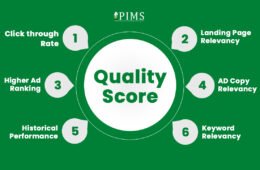
Every search triggers an auction that runs in milliseconds. Advertisers bid on keywords, and you only pay when someone clicks — that is pay-per-click. But the highest bidder does not automatically win. Google multiplies your bid by your Quality Score, a 1-to-10 rating of how relevant your ad and landing page are to the search. A relevant ad with a strong Quality Score can outrank a higher bid and pay less per click. Cheap clicks are not bought; they are earned by relevance.
Typical Google Ads costs for small businesses in 2026
These are the ranges small businesses most commonly see. Treat them as planning figures, not quotes.
- Cost per click: around $1 to $2 on average for Google Search, $0.50 or less for low-competition local terms, and $5 to $10 or more in legal, finance, insurance, and home services.
- Monthly ad spend: most small businesses spend $500 to $2,000 a month when starting out. E-commerce and more competitive markets commonly spend $2,000 to $5,000 a month.
- Daily budget: Google works on daily budgets, so a $900 monthly budget is about $30 a day. Set a different daily budget per campaign to test one service area before spending on the next.
- Cost per lead: the number that matters most. A $2 click that becomes a $60 lead is cheap. A $0.50 click that never converts is expensive. Typical cost per lead for local services runs roughly $20 to $100.
Google Ads is one line in a wider marketing budget — see how much digital marketing costs overall.
What else you pay for besides clicks
Ad spend is not the whole bill. If an agency manages your campaigns, expect a management fee on top — commonly 15 to 20 percent of ad spend, or a flat $500 to $2,000 a month for small accounts. Ask whether the fee is included in the number you were quoted — a $500 ad budget can carry a $500 management fee. Your ads also need somewhere good to land — a focused landing page that matches the ad is one of the cheapest ways to cut your cost per lead. Call tracking, reporting tools, and ad creative can add 20 to 30 percent to the headline ad spend.
Five things that push your costs up — or down
If your Google Ads bill feels too high, one of these five is usually the reason — and a lever you can pull.
- Quality Score. Google rewards relevance with cheaper clicks. A high Quality Score — click-through rate, ad relevance, landing page experience — can cut your cost per click significantly. A low score does the opposite.
- Keyword intent. Broad keywords like “plumber” are expensive and vague. Specific phrases like “emergency plumber in Pittsburgh” cost less and convert better, because the searcher knows what they want.
- Location targeting. Ads shown across a whole country compete with everyone. Ads shown in one city compete with far fewer advertisers. Tight location targeting is one of the fastest ways to cut wasted spend, especially with local SEO alongside it.
- Match types and negative keywords. Broad match can show your ad for searches you never intended. Negative keywords — terms you explicitly exclude — stop the waste. Reviewing the search terms report weekly saves real money.
- Landing page relevance. Sending ad traffic to your homepage is the most common waste in small business advertising. The page should match the ad’s promise and make the next step obvious: call, book, or buy.
How to set a budget that will not hurt
Start small: one service, one location, a tight set of keywords, and a daily budget you can afford for a month — $20 to $50 a day for many small businesses. Track cost per lead, not clicks. If a campaign produces leads at a sensible price, increase the budget. If not, fix the ads and landing page first — more budget on a broken campaign only buys more expensive failure. Separate campaigns by intent: brand searches are cheap and convert well; generic searches cost more and convert worse. Decide in advance what a lead is worth. If an average job is worth $300 and you convert one in five leads, you can pay up to $60 per lead and break even. That number is your real budget limit. If you would rather hand ads over, read our guide to choosing an agency first, and ask how they report, how they charge, and who owns the account.
Frequently asked questions
What is a good monthly budget for Google Ads?
$500 to $2,000 a month is a sensible starting point. Below $500 there is rarely enough data to learn what works. Above $2,000, you should already know your cost per lead.
Can I set a maximum spend so I never overshoot?
Yes. Set a monthly cap by dividing your monthly budget by 30.4 and using that as the daily budget. Google may spend up to twice the daily budget on a busy day, but not more than the monthly limit.
Is Google Ads worth it for a small local business?
Often yes. Local searches carry buying intent, and paid search delivers results immediately, unlike SEO. The combination works best: ads for today, SEO for the long term.
Why are my clicks so expensive?
Usually one of three reasons: competitive keywords, a low Quality Score, or broad targeting. Check Quality Scores, the search terms report, and location settings first.